Your First Tattoo — A Practical Guide from Phantom Avenue
- Phantom Avenue
- Dec 6, 2025
- 10 min read

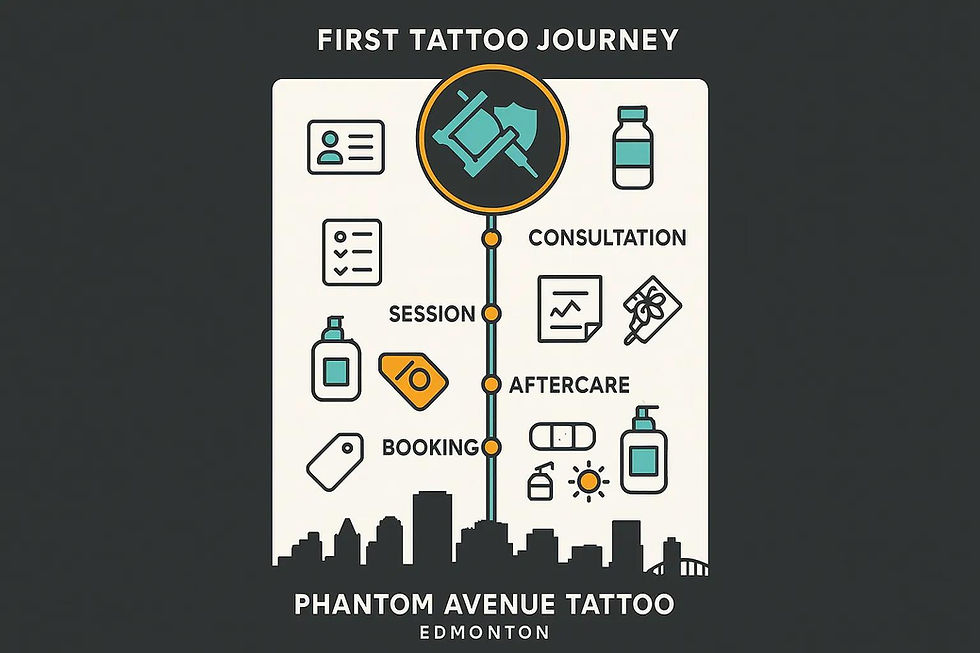
Excited about your first tattoo? That’s normal — so is a little nervousness. This guide walks you through the whole first-timer experience: how to prepare for a consultation, what to expect in the studio, and a straightforward Edmonton aftercare plan. We also explain how Phantom Avenue Tattoo welcomes new clients with clear communication, professional care, and strict hygiene practices. You’ll get practical steps for prepping, a step-by-step session rundown, realistic notes on pain and healing, and tips for choosing an artist whose specialty fits your idea. Topics include consultation logistics, a pre-appointment checklist, session procedures, immediate and long-term aftercare, matching to artist specialties, beginner-friendly styles, and answers to common booking and cost questions — all focused on helping first-timers feel informed and confident.
How Should You Prepare for Your First Tattoo at Phantom Avenue?
Good preparation lowers stress and improves results. Simple things like being rested, hydrated, and clear about your design make the appointment smoother and the healing more predictable. Below are practical steps to get your body and mindset ready for your Phantom Avenue visit, followed by a closer look at the consultation and a compact pre-appointment checklist you can follow.
What Is the Consultation Process for First-Timers at Phantom Avenue?
A consultation locks in the scope, placement, and an estimated time by pairing your idea with an artist who knows the style you want. At Phantom Avenue, consultations for first-timers typically cover concept sketches, size and placement options, and whether a virtual or in-person meeting works best — all so the artist can gather references and plan a stencil. Expect questions about medical history, skin issues, and lifestyle factors that affect healing; those details shape aftercare and session pacing. Ask for a rough time estimate and an honest read on pain for your chosen placement so there are no surprises when you sit down to get inked.
What Pre-Tattoo Checklist Should You Follow Before Your Appointment?
Use this quick checklist to arrive ready: it covers ID, physical prep, and clothing choices that help the artist work and help your tattoo heal. Bring a government ID if requested, reference images or mood boards, and notes about allergies or medications. In the 24–48 hours before your appointment, focus on sleep, eat a solid meal before you arrive, stay hydrated, and avoid alcohol or aspirin-like medications that thin the blood. Wear comfortable, loose clothing that gives easy access to the area being tattooed and keeps you from shifting around while the artist works.
Bring a valid government-issued ID to confirm age and booking details.
Eat and hydrate well in the 4 hours before your appointment to reduce lightheadedness.
Skip alcohol and blood-thinning medications for at least 24–48 hours before your session.
These preparation steps lower risk and increase comfort — and they set you up for a clearer, calmer in-studio experience.
What Happens During Your First Tattoo Session at Phantom Avenue?
A first session follows a clear sequence: check-in, consent, stencil approval, the tattoo itself, and immediate post-session care. Knowing each phase helps remove uncertainty. The workflow protects both you and the artist: consent forms record health disclosures, the stencil confirms placement, and the artist paces the work to balance quality and comfort. Below is a short step-by-step summary of what happens in the studio and a table that breaks down common session components, typical durations, and what you can expect while you’re here.
Arrival and check-in, where staff confirm your booking and review consent forms.
Consultation and stencil placement, giving you a chance to approve size and placement.
Tattooing, during which the artist applies the design in passes and offers breaks as needed.
Wrap-up and immediate aftercare, where the artist cleans, covers the tattoo, and explains home care.
These steps give you a quick map of the process. The table below helps you plan your time and know what to expect during each stage.
Stage | What Happens | Typical Time |
Consultation | Discuss concept, placement and plan | 15–30 minutes |
Stencil Approval | You confirm placement and minor tweaks | Visual confirmation and minor adjustments |
Tattooing | Artist works in passes; breaks provided as needed | 30 minutes to several hours depending on size |
Immediate Aftercare | Clean, protective dressing applied; home care explained | Clean, apply protective dressing, explain home care |
Short tattoos often finish in one visit; larger pieces may need multiple sessions. Plan accordingly and follow the aftercare your artist gives you.
How Does Phantom Avenue Ensure a Comfortable and Professional Studio Environment?
A professional studio combines visible hygiene with clear communication and client-focused service to keep you safe and calm. At Phantom Avenue you’ll see a clean workspace, single-use supplies like needles and gloves, and sterilized equipment where needed — all standard practices to build trust. Staff explain each step, offer breaks, and keep a respectful, low-pressure atmosphere for nervous clients. These practices let you relax and focus on the experience instead of worrying about safety or protocol.
That same attention to care carries into pain management during your session.
Tattooing Procedure: Hygiene, Risks, and Aftercare Essentials
All body-modifying procedures carry risk depending on the environment, the practitioner’s training, the materials used, and the aftercare followed. Poor hygiene can cause localized infections and, in rare cases, more serious complications. Practitioners should follow strict hygienic protocols and be aware of possible complications. This section covers requirements for a hygienic work area, equipment handling, sterilization, and waste disposal, as well as the tattooing steps and preventive measures like hand hygiene and clear aftercare instructions. Clients must be informed about risks and must disclose relevant health information. Assessing client suitability and knowing contraindications are essential parts of safe practice. (Procedure of tattooing, 2018)
What Pain Management Techniques Are Available for First-Time Clients?
Pain varies by placement, your tolerance, and how long the session lasts, but studio techniques and simple coping strategies can make a big difference. Artists use steady pacing, short work intervals, and scheduled breaks to reduce fatigue; breathing techniques, conversation, and music help distract and relax you. If topical numbing is an option, your artist will discuss it during the consultation — ask about effects on sensation and healing. Knowing realistic pain expectations for your chosen placement helps you prepare and choose an approach that keeps quality high while minimizing discomfort.
Small, superficial areas usually feel like short bursts of sharp sensation that pass quickly.
Places over bone or thin skin tend to feel stronger and may be best tackled in shorter sessions.
Artists use breaks and clear communication to pace the work and protect both detail and comfort.
With pain management planned, the next essential step is proper aftercare.
How Do You Care for Your New Tattoo? Edmonton Tattoo Aftercare Guide from Phantom Avenue
Aftercare is the single most important factor in how well a tattoo heals and how it looks over time. Proper cleaning, moisturizing, and sun protection prevent infection and preserve ink. Aftercare starts the moment your artist bandages the piece and continues for weeks as your skin restores itself. Below is a practical timeline for Day 0 through Month 1 and a short table that compares recommended product types and actions to support healing.
What Are the Essential Steps for Tattoo Aftercare at Phantom Avenue?
Right after your session the artist will apply a protective covering — follow their instructions on when to remove it and begin the cleaning routine. Generally: wash gently with a fragrance-free, mild soap twice daily, pat dry with a clean towel, and use a thin layer of a recommended moisturizer several times a day to prevent cracking and heavy scabbing. Avoid soaking the area (no baths or swimming) for the first two weeks, keep the tattoo out of direct sun, and wear loose clothing to prevent rubbing. As the skin flakes and peels, keep moisturizing until fully healed. If you see signs of infection — increasing redness, pus, or fever — contact the studio and seek medical care if symptoms worsen.
Aftercare Item | What to Do | Why it Helps |
Gentle soap | Wash 2× daily | Removes blood and lymph while minimizing irritation |
Fragrance-free moisturizer | Apply thin layer 2–4× daily | Keeps skin hydrated and supports healing |
Protective clothing / sun protection | Avoid direct sun and friction | Prevents pigment loss and extends healing time |
Following these steps reduces the chance of problems and lowers the need for touch-ups later on.
Hygiene Standards and Infection Prevention in Tattoo Shops
Hygiene standards and infection-prevention practices are central to safe tattooing. Proper cleaning, equipment handling, and studio protocols minimize risk and protect both client and practitioner. (Hygiene standards in the tattoo parlour and practices for prevention of infection, 2015)
Which Products Does Phantom Avenue Recommend for Optimal Healing?
We recommend fragrance-free, gentle products and advise against strong perfumes or harsh chemicals that can irritate fresh ink. Ask your artist during the consultation for studio-preferred moisturizers. Look for non-comedogenic formulas for sensitive skin and apply sparingly so the skin can breathe. Use sunscreen only after the tattoo has fully healed; until then, avoid direct sun. If you notice unusual or persistent inflammation, follow the studio’s guidance about contacting them for follow-up care.
Pick fragrance-free, hypoallergenic soaps and lotions to lower reaction risk.
Use a thin layer of moisturizer to keep skin supple and reduce scab formation.
Avoid heavy petroleum products that can trap moisture and slow healing.
Consistent aftercare makes a big difference in long-term quality. Next, we’ll cover how to match your design to the right artist at Phantom Avenue.
How Do You Choose the Best Tattoo Artist for Your First Tattoo at Phantom Avenue?
Picking the right artist ensures the style, line work, and healing expectations line up with what you want. An artist’s portfolio shows their technical strengths and preferred subjects, so look for healed work, steady lines, and consistent color to find a good match. The table below shows common specialties and which beginner-friendly designs they suit best, followed by practical tips for evaluating portfolios and booking a consultation.
Artist Specialty | Characteristic Strength | Best for First-Timers |
Fine-line / Minimalist | Precise, delicate lines | Small symbolic tattoos with minimal shading |
Traditional / Neo-traditional | Bold lines and solid fill | Durable designs that age predictably |
Blackwork / Geometric | High-contrast layouts | Simple shapes and larger pieces that photograph well |
Look for recent photos of healed work, not just fresh shots, to judge long-term results.
Ask about each artist’s preferred placements and typical session lengths to match your comfort and schedule.
Book a consultation to discuss revisions, stencil placement, and a clear price/time estimate.
Evaluating artists this way helps you find someone whose style and process fit your vision.
What Are the Specialties of Phantom Avenue’s Tattoo Artists?
Our artists cover a range of specialties, commonly including fine-line, minimalist, and custom work that suit first-time clients looking for simple, meaningful pieces. Choosing an artist experienced with your desired style increases the chance the line work and healing will meet expectations. We’ll discuss how style affects healing — for example, dense color takes longer and may require more sessions, while small line work typically heals faster — so you can pick an approach that fits your tolerance and timetable.
How Can You View Portfolios and Book Consultations with Phantom Avenue Artists?
Prepare to view portfolios by collecting reference images and a short description of your idea — this helps the artist give focused feedback. When booking or walking in, tell the studio the style, approximate size, and placement so you get realistic availability and pricing expectations; Phantom Avenue accepts consultations and walk-ins within studio policy. Bring images that show line weight, shading, and scale you like, and mention any lifestyle factors that affect placement and healing. A clear consultation leads directly to scheduling, deposit, and cancellation details.
Bring reference images and notes on size/placement to keep consultations efficient.
Disclose skin issues, allergies, or medications before booking.
Confirm whether you’re booking a consultation or planning a walk-in visit.
These steps help you secure an artist who matches your vision and prepare you for how design choices affect healing.
What Tattoo Styles Are Best for First-Timers at Phantom Avenue in Edmonton?
Beginner-friendly styles balance visual impact with shorter needle time and simpler healing. Fine-line, minimalist, and small blackwork pieces are popular because they’re quicker to complete and easier to care for. The sections below cover popular starter designs and how we adapt concepts so they remain personal while holding up well over time.
Which Custom Tattoo Designs Are Popular Among First-Time Clients?
First-timers often pick simple symbols, small botanical motifs, or minimal script — designs that work well in short sessions and heal with less swelling. Simpler art reduces dense shading and multiple color layers, which shortens session time and eases the initial healing phase. Common placements like the forearm, ankle, or upper shoulder balance visibility and comfort; joints and high-motion areas may need extra healing attention. Knowing these trade-offs helps you choose a meaningful design without unnecessary complications.
How Does Phantom Avenue Tailor Designs to Individual Self-Expression?
Our artists work with clients to turn personal stories into clear, wearable designs that suit a first session. That often means sketching simplified variations that keep the meaning but reduce complexity. Conversations cover size tweaks, line weight, and placement to account for long-term wear and easier healing, and artists show healed examples to help you picture the final result. This collaborative process ensures your design reads well now and years from now, without sacrificing the meaning behind it.
Collaborative sketching removes ambiguity and aligns artist and client expectations.
Simplifying complex ideas into bold, readable elements improves longevity.
Artists explain how scale and placement influence appearance and healing over time.
With style and artist chosen, many first-timers still have practical questions about cost, age, and booking — those are covered next.
What Are Common Questions First-Timers Ask About Phantom Avenue Tattoos?
New clients frequently ask about pricing, age and booking rules, healing timelines, and touch-up or cancellation policies. Clear answers help you plan before booking. Price depends on size, complexity, color, and the artist’s rate, so request an estimate during consultation to avoid surprises. Age checks and booking rules protect clients and the studio — bring a government-issued ID at check-in and, if required by local law, arrange parental consent. Below are concise answers to frequent questions and practical steps to finalize your booking.
How Much Does a First Tattoo Cost at Phantom Avenue in Edmonton?
Pricing depends on complexity, size, placement, and the artist’s experience. Small minimalist tattoos typically cost less than large, color-heavy pieces requiring multiple hours. During your consultation ask for either a time-based estimate or a flat price so you can budget. Asking how many sessions a design needs clarifies cost and scheduling. If budget is a concern, consider simplifying the design or reducing its size for a first session.
What Are the Age and Booking Requirements for First-Time Clients?
Age and booking rules ensure legal compliance and informed consent. Most studios require ID at check-in, and some procedures or placements may have stricter rules. Bring government-issued identification to your appointment, and if you fall below a local age threshold, be ready to arrange parental consent or guardian accompaniment. When booking, ask about deposits, cancellation windows, and walk-in policies so you know how the studio handles scheduling and no-shows. Confirming these details during your consultation avoids last-minute issues and keeps your session running smoothly.
Always carry valid identification for age and booking verification.
Ask about deposits and cancellation policies when you schedule to avoid surprises.
Check whether walk-ins are accepted or if a consultation appointment is recommended for your design.
These practical answers complete the guided path for a confident first tattoo experience at Phantom Avenue Tattoo.


Comments